


Our veterinary clinic places special emphasis on the immediate treatment of emergency cases. Patients arriving in life-threatening conditions or requiring urgent intervention receive professional care without delay.
Emergency cases take priority over patients waiting in the reception area — the first available veterinarian immediately begins treating the critical patient.
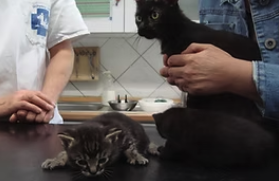
The most frequent reasons for emergency care include:
Various types of poisoning
Severe heart failure, oxygen deprivation, respiratory and circulatory disorders
Accidents, fractures, and bleeding
Difficult labor, urinary or gastrointestinal obstructions
Neurological seizures (e.g. epilepsy)
Glaucoma, severe pain, open wounds, loss of consciousness
Burns, heatstroke, or hypothermia
These patients are always classified in the red emergency category and receive immediate medical intervention.
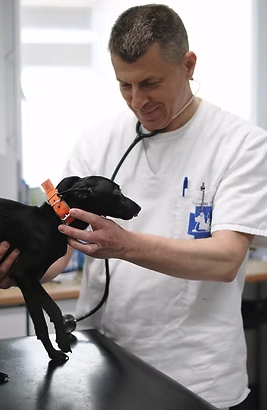
Our medication stock is tailored to emergency needs and includes nearly 70 types of targeted drugs in addition to basic medications.
Accurate and safe dosing is supported by infusion pumps and volumetric dosing devices.
For hypothermic or small-sized animals, we use warmed infusion solutions to ensure rapid stabilization.
In 2024, our clinic acquired a blood gas and acid–base analyzer, enabling us to obtain a precise assessment of a patient’s condition immediately after blood sampling. This allows for fast and targeted medical intervention.
Emergency diagnostics are further supported by digital X-ray and high-performance ultrasound equipment.
For patients with respiratory failure, our clinic is equipped with:
Comprehensive airway management tools
Mechanical ventilator
Endoscopic (e-Scope) assistance for difficult intubations
Oxygen supply available at multiple treatment stations
When required, intravenous or intraosseous fluid therapy can also be provided.
Critically ill patients are continuously monitored using advanced patient monitoring systems that measure:
Heart rate
ECG
Blood pressure
Oxygen saturation
Core body temperature
End-tidal carbon dioxide (ETCO₂)
For accurate blood pressure measurements, we also use an HDO (High Definition Oscillometry) system.
Emergency patients are treated by highly trained veterinarians and assistants with extensive experience.
We regularly study the latest professional literature, conduct internal training sessions, and continuously update our knowledge — significantly improving survival rates for critically ill patients.
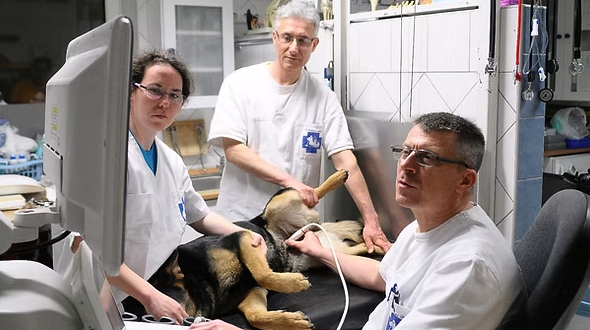
Emergency services are available during our clinic’s opening hours, Monday to Friday between 11:00 AM and 5:00 PM.

This website was created within the framework of, and with the support of, the Demján Sándor Program.
Opening hours: Monday–Friday, 11:00 AM–5:00 PM
Dr. Antal Rengei: 06-20-9217-737
Dr. János Szalay: 06-30-9532-698
Dr. László Perényi: 06-30-1956-960
Dr. Richárd Komáromi: 06-62-543-855
This website was created within the framework of, and with the support of, the Demján Sándor Program.
© 2025 Kisállat-Ambulancia Kft. All rights reserved.